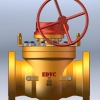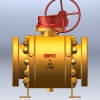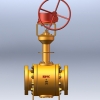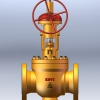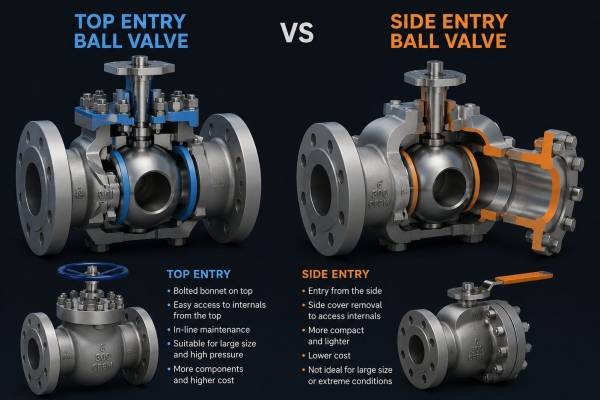
Why would a customer choose a Top Entry Ball Valve instead of a Side Entry Ball Valve?
1. The biggest advantage: maintenance without removing the valve
With a Top Entry Ball Valve, the bonnet/top cover can be removed and the ball, seats and other internal components can be accessed from above.The pipeline normally doesn't have to be disconnected just to remove the valve internals.
With a conventional Side Entry Ball Valve, the body is assembled from the side, so major internal maintenance generally requires removing the valve from the pipeline.
2. Much more attractive for critical pipelines
This is why Top Entry is particularly attractive in:
· Oil & gas transmission pipelines
· Gas processing
· LNG
· Offshore platforms
· Petrochemical plants
· Long-distance pipelines
· Underground/buried pipelines
· Critical isolation applications
Imagine a 48" pipeline valve weighing several tonnes.
If the valve needs major maintenance:
Side Entry:
You may need to isolate → drain/depressurize → disconnect pipeline → remove valve → transport valve → repair → reinstall → reconnect → pressure test.
Top Entry:
You can potentially isolate → depressurize → remove top closure → service internal components → reinstall.
That's a huge difference in maintenance time and cost.
3. Lower downtime
For pipeline operators, the valve's purchase price isn't necessarily the biggest concern.
They care about:
“How long will my pipeline be out of service?”
For a critical pipeline, one hour of downtime can potentially cost far more than the difference between a Top Entry and Side Entry valve.
Therefore, a Top Entry valve can justify its higher initial purchase price through lower maintenance downtime.
Previous: Successful Valve Delivery to Italy
Next: There is no more.